Saturday, December 11, 2010

Anthony Mundine

Whether he admits it or not, it’s the end of the road (or at least the boxing road) for Anthony ‘The Man’ Mundine. He may fight on, and win a few more fights, but on the evidence, his reflexes are shot and his strength and durability minimal. It’s been quite a journey since he walked away from a rugby league career in 2000. A magnetic presence, The Man was a source of pride to many Koories and his individualism and personal style an attractive alternative to the conformism and uncouthness of some sports people. Unfortunately the expectations some of us had of him as a leader were probably unrealistic. There were moments however when anything seemed possible.

Anthony achieved far more than most could have foreseen as a fighter and is one of a very small group of athletes who’ve performed at an elite level in two distinct sports. The problem was the better he became as a fighter the greater the expectation that he would fight major names in the sport but once he was established he preferred low risk fights in Australia. After each win there was always talk about taking on the best. It never happened and when a head-butting novice finally knocked him out it no longer mattered.

As well as the highlights Anthony also provided a few lowlights - the fight with Lester Ellis (Ellis was an alcoholic at the time) and the fight with Danny Green - with both men engaging in coded race-baiting.

The stand The Man took against racism in rugby league was courageous and the viral response an indication of how insecure a lot of Settler Australians are when challenged by Aboriginals. Unfortunately he undermined any chance to build on this. His comments on race sometimes seemed to coincide with the publicity demands of his fights and ten years after leaving rugby league it's hard to say if his understanding of issues affecting Aboriginal Australia is any more developed. This all sounds pretty tough but I believe it's the result of trying to balance his contradictory roles as fighter, promoter, and Aboriginal leader. Once The Man is out of boxing we'll see his full potential.

Friday, December 3, 2010

Winter's Bone, Age and Youth

Winter’s Bone. Now on general release, I saw this at the Melbourne International Film Festival. I’d just seen a few blockbusters so at first it seemed amazingly low-tech and needy in its demanding of sustained attention. The film works with a subtle narrative so it won’t appeal to everyone but it effectively sketches out the lives of a group of Ozark mountain people. What struck me was the eros of their attachment to the animals they hunted for food and those they kept a pets. For some Murri rural workers this eros was a transmutation in a post-colonial setting of the original relationship with land and creation. I count myself fortunate in that I’m part of a minority who were actually connected to people who embodied it. Some of the women in Winter’s Bone looked like they had Native American ancestry as well, so I wasn’t completely surprised to read an interview with the director in which she talked of the importance of animals to the Ozark community she worked with and the Native American connection.

Jindalee Lady. Thanks to Jane Brown, School of Culture and Communication Library Manager, for arranging a screening of this film at the Australian Centre for the Moving Image. We never quite untangled the riddle of why this film is almost impossible to see. Johanna, Jane and I watched it, and a consensus opinion was that though Brian Syron’s film may be naïve in its cinematic technique, and some of its representations, there is nothing naïve in its emotional power. The film is a tribute to Aboriginal women centred on conception and the mother-child connection. Lydia Miller amps up the intensity with an outstanding performance.


Age and Hypocrisy. We’d received emails from a Settler woman from another university who’d received some grant and was inviting people to a workshop. (The workshop included the usual genuflections to Indigenous people.) It looked like it could be relevant to our program but on the day of the workshop we couldn’t attend because it clashed with our School planning day. As a compromise I arranged for a 20 year old high-achieving Aboriginal undergraduate (who does some work for me as a research assistant) to attend as an observer. The intention was for AIS academics to attend further meetings. The woman who had been emailing us was notified by email that this would happen. On the day of the meeting there was torrential rain and despite having a bad cold the research assistant put on a shirt with a collar and leather shoes and headed off to the workshop. On arriving at the room where the workshop was supposed to be he was confronted by a middle-aged Settler woman whose opening gambit was, ‘Who are you?’ and who then dismissed him with the words, ‘I think you’ve come to the wrong place.’ If he’d only confirmed that woman’s name I’d be doing a lot more with this but that’s where mentoring comes in.

Age and Marginality. A post-graduate student of mine (in his early twenties) presenting a paper at one of those off-campus/para-university events was subject to an unchecked half hour of blather and personal attack by an ‘independent scholar’. I’m not blind to the imperfections of sandstone universities and the University of Melbourne but I sincerely believe that this couldn’t have happened if it had been held at the University of Melbourne. In fact I was surprised the other week when attending a contentious paper presented by a visiting scholar on Indigenous issues, at the fairness and courtesy of the critique by University of Melbourne scholars.

Incidents like these and our continued response to them are the substratum necessary for the advancement of Australian Indigenous Studies.

Volunteering. If you know a student or recent graduate who is interested in volunteering Youth Challenge Australia is worth considering. More on these opportunities next year.

http://www.youthchallenge.org.au/

Saturday, November 20, 2010

Islam dreaming and a rare drawing


Farewell. We’ve had to farewell Heather Dorries, Endeavour Research Fellow based in Australian Indigenous Studies. Heather had to return home to Canada because of a family commitment. While she was with us she was the ideal visiting fellow: interested in learning about us, the University of Melbourne, Australian society, Aboriginal Australia, as well as providing us with perspectives on Indigenous issues in Canada, and carrying out her own research.

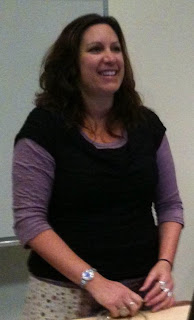
Also Johanna Simmons who has been the backbone of the AIS program for the last three years has left us to take up a position in the Office of the Provost. We’ll miss her but it’s great to see her achievements recognised with a promotion. ( The photograph is of Johanna at the end of winter. She wasn't usually dressed like that.)
http://www.provost.unimelb.edu.au/


Greg Inglis. A big year for Inglis with the latest news suggesting that he is going to play for South Sydney. If that happens it will be a huge source of pride for grass roots Koories in NSW. I had one of those I was there moments when Inglis made his debut for the Melbourne Storm as slight teenager filling in for Billy Slater at fullback. His development as a footballer is self-evident but Inglis also showed a firmness of character in the way he addressed the Andrew Johns racial vilification incident. ‘Mediation’ should be well and truly consigned to the past.

http://www.abc.net.au/news/stories/2010/06/23/2935266.htm


Massacre Drawing.
The latest edition of the national Library’s eNews reports on a rare drawing of a massacre carried out by settlers in QLD in the 19th century.

‘The drawing is of the massacre of a group of Aboriginal men, women and children by white squatters at One Tree Hill near the road from Moreton Bay to Darling Downs. The drawing depicts eleven squatters firing on a group of 25 Indigenous people, likely to be of the Barunggahm, Jarowair, Giabal and Keinjan language groups.’

http://nla.gov.au/nla.pic-vn4970952

Pecan Summer. Attended the premiere of Debra Cheetham’s Pecan Summer in Mooroopna. The production had many profound moments – my favourite was the last scene where people assemble in Federation Square to hear Prime Minister Kevin Rudd’s Apology to the Stolen Generations. Following the broadcast of Mr Rudd’s speech Ursula Yovich and Caitlin Munro, playing the separated mother and daughter, sing a duet (independently of each other) before leaving the stage without ever connecting.

Launch. Dr Peta Stephenson's Islam Dreaming: Indigenous Muslims in Australia was launched at the Post Colonial Institute. Lots of people in attendance and an upbeat mood to welcome a groundbreaking text.
http://www.unswpress.com.au/isbn/9781742232478.htm

Friday, October 8, 2010

Happened

Happened. Indigenous Studies Teaching Colloquium. Over 40 registrations and at times 50 or so people present.  The aim was to have an open dialogue with a view to uncovering possibilities for cooperation, collaboration, and improvement. We commenced the day with four concise presentations by practitioners on key issues relating to Australian Indigenous studies and then broke off for discussion. What was evident was that there has been a rapid shift in what can be identified as Australian Indigenous studies at the University of Melbourne. Many of those in attendance were from schools and disciplines not previously associated with Australian Indigenous studies. It was energising to encounter exciting new initiatives being pursued in a spirit of openness and collegiality. Special thanks to the AIS team and Emma Kowal, Rebecca Garcia Lucas, and Alicia Coram.


Read. Leonard Peltier,  Prison Writings: My Life is my Sun Dance.  Leonard Peltier has spent years in prison for a crime many believe he didn’t commit: the shooting of two FBI agents in 1975 at Pine Ridge Reservation, South Dakota. Peltier’s description of the American prison system is brought into sharp relief by his commitment to Native American spirituality and his refusal of a degraded, inmate’s mentality. Chief Arvol Looking Horse, Keeper of the Sacred White Buffalo Calf Pipe writes the foreword to Prison Writings…


Seen. Yohanghza Theatre Company’s  Midsummer Nights Dream  and Hamlet. Essential Shakespeare presented through the prism of Korean shamanism and traditional culture. Inspiring – and left me increasingly dissatisfied with a lot of Australian and Australian Indigenous theatre. Maybe the theatre companies need less constraints and more corporate and public sector support.


http://www.theaustralian.com.au/news/arts/spirited-korean-take-on-denmarks-woes/story-e6frg8po-1225926373952


Melbourne Fringe.  AIS student Tom Carmody appears in Coma and the Good Times, The Open Stage, University of Melbourne. <http://www.melbournefringe.com.au/fringe-festival/show/coma-and-the-good-times/>.

Monday, September 13, 2010

Australian Indigenous Studies Practitioners' Colloquium

The Australian Indigenous Studies Program and the Indigenous Studies Teaching
and Learning Programs Sub-Committee are convening an annual colloquium for
 staff who teach and develop subjects with Australian indigenous content, or
 who teach Indigenous Australian students. The colloquium will focus on common 
issues, shared experiences and identification of best practice. It will 
conclude with a discussion of themes for a 2011 forum. Morning tea and lunch 
will be provided. Friday 17 September, 9:45am - 2:30pm, Yasuko Hiraoka Myer
Room, Sidney Myer Asia Centre. Enquiries: Johanna Simmons 8344 8143. RSVP
(essential) to: jsimmons@unimelb.edu.au

Sunday, August 29, 2010

The New Semester


Australian Indigenous Studies 100181. The start of a new semester and the good news is that we’ve held student numbers in our interdisciplinary foundation subject Australian Indigenous Studies. It will probably be the only chance many of these students have to do an Australian Indigenous studies subject, and one which introduces a breadth of perspectives and facts. It’s also the necessary foundation for developing an Indigenous studies program and I'll have more to say on this in future.


Dr Rachel Nordlinger, Linguistics and Languages, lecturing on Aboriginal languages for 100181 students.

Open Day, Sunday 15 August. As usual, louring weather as the AIS team backed up for an additional day’s work. Notwithstanding the weather this was a special Open Day for AIS. Each year an increasing number of the gifted and motivated make their way to our presentation. This year I was able to go through the suite of concordant subjects that make up the AIS major and honours program – an advance on the grab bag of subjects that sometimes follows from cross-listing, or discordant subjects sometimes quite loosely held together by the notion of ‘discipline’. It all made me think back to 2007 when we stepped up to back the Growing Esteem strategy. The spirit of optimism in the air then has been realised.


Tutor Coordinator Alicia Corum and tutor Tom Newman-Morris workshop ideas at a 100181 team meeting.


Odette Kelada, Australian Indigenous Studies and Jason Eades, Koorie Heritage Trust, lecturing for Critical Debates in Australian Indigenous Studies students.

Wednesday, July 14, 2010

NAIDOC Week

Honours. I’ve just received news that our Honours program has been approved. Thanks to Johanna Simmons, Sharon Tribe and Peter Eckersall, School of Culture and Communication, for support; and Marion Campbell, Associate Dean, Teaching and Learning, Faculty of Arts, for guidance. I’ve always envisaged a two-year window for setting up our courses. That’s been achieved.  


Worawa College, Healesville. Worawa College has experienced some upheaval in recent years but has re-established itself as an Indigenous all girls school.  It’s meeting an important need and we wish the school every success.

http://www.worawa.vic.edu.au/


Didn’t see  Jindalee Lady. Few people have seen this 1992 film though it is referred to in Marcia Langton’s Well I Heard it on the Radio… . Directed by the late Bryan Syron, it’s one of a corpus of hard to find films with Aboriginal actors made in the ‘80s and early ‘90s – an important transitional period in recent Aboriginal history. Unable to find a dvd of Jindalee Lady I subscribed to a company that listed the film for on-line viewing. After trying several computers and watching a blank screen I gave up.  Eventually I’d like a collection of these films in the University library.


Attended. Deborah Cheetham’s ‘Til the Black Lady Sings’ (Cheetham providing some insight into her life with reminiscence and song) and a preview (with cast) of ‘Pecan Summer’. The performance took place at BMW Edge and there was the magical combination of music, and outside, Melbourne’s lights reflected in the Yarra. Previously I’ve mentioned the Indigenous opera community Cheetham has created - noteworthy on the night were the numbers of grass roots Indigenous people in attendance and the powerful and immediate way they recognised the medium of opera as giving form to their histories and sentiments.


Visitors. Heather Dorries, an Indigenous Canadian scholar (Anishinaabe) arrives later this month to spend the semester with us.


A special perspective. Mr John Howells was a student in the subject Key Thinkers and Concepts last semester. No big deal except that Mr Howells is 78 years old and enrolled as part of the Community Access Program.   His thoughts on the subject:


BACK TO SCHOOL


People over fifty years of age like me (born 1932) learned little at school about Australia's indigenous people. How different it is now. Today nearly four hundred first year students at Melbourne University each year enrol in the subject, "Australian Indigenous Studies". Many go on to complete a major in the field and some go on to post-graduate study and research work. Every university across Australia has similar programs. School programs today also reflect this growing interest. One may expect that over the next ten or twenty years Australians will become well-informed about our indigenous people.


It is important that those of us, who are over fifty and who are concerned about the protection of human rights in Australia, seek to be well-informed about our indigenous citizens. With this in mind I took the second year subject, "Key Thinkers and Concepts", at Melbourne University during Semester 1 this year. There was a lecture each Tuesday morning from 9.00 till 10.30 and a tutorial from 11.00 till 12.00. Our lecturer, Philip Morrissey, a tall Aboriginal man, was excellent and introduced us to the anthropologists W.E.H.Stanner and Eric Michaels, the cultural studies theorist Stephen Muecke, the cultural nationalists Mudrooroo, Oodgeroo Noonuccal and Kevin Gilbert, the public servant and statesman Nugget Coombs, the reconciliation and social justice thinkers Mick and Patrick Dodson, the conservative thinker Noel Pearson, the Aboriginal educationalist Chris Sarra, and the Yolgnu leaders Mandawuy and Galarrwuy Yunupingu. It was fascinating and I enjoyed every moment of it. During the tutorials we took it in turn to introduce to our small group one of the set texts and to lead a discussion of it. We also had to write two essays on set topics during the course.


I was very nervous at first, but it was a great course and a great experience. The other students were all about nineteen or twenty years of age, but were very accepting of an old fellow like me. The first time the tutor called the roll and I answered "yes", one chap asked, "How long, John, since you last answered a roll-call?" When I replied, "about 60 years", there were grins all round. I was able to enrol through the University's Community Access Program which admits mature age students without prerequisites. How much did it cost? It is not cheap. As a former student I got a 20% discount, but it still came to $1,339.


I am now all fired up to share some of things I have learned and some of the books and other writings I have read. My first instalment follows. I hope you will be encouraged to read the book I am recommending.


John Howells


NAIDOC breakfast. A pleasant interval last Friday as Indigenous staff and students gathered with non-Indigenous colleagues for a NAIDOC Week breakfast. Simone Brotherton from the Centre for Indigenous Education orchestrated proceedings; Acting Provost Pip Pattison welcomed guests; Centre for Indigenous Education Manager Chris Heelan spoke on the history of NAIDOC; and Aunty Joy Murphy Wandin conducted the Welcome to Country in her own inimitable style that combines maximum dignity with personal warmth.